OpenClaw Review 2026. The Free Autonomous AI Agent Reshaping the Future of Automation


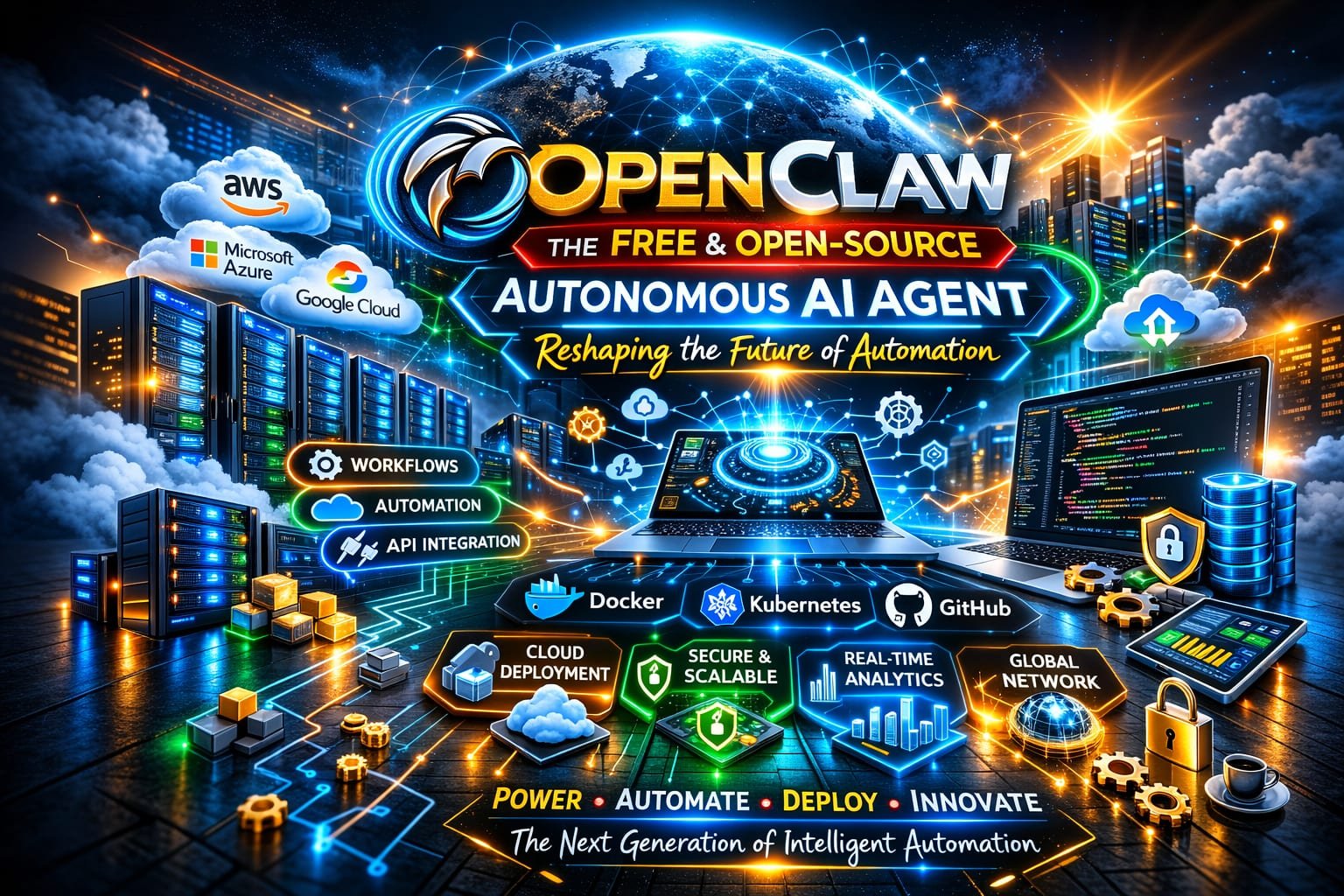
OpenClaw is a free and open-source autonomous AI agent framework designed to execute real-world digital tasks rather than simply generate conversational responses. It integrates large language models into operating systems and cloud environments, enabling artificial intelligence to perform structured workflows, automate commands, interact with APIs, and function as a persistent digital operator.
As an open-source project, OpenClaw follows the same innovation model that powers platforms like GitHub (https://github.com), Docker (https://www.docker.com), and the Cloud Native Computing Foundation (https://www.cncf.io). This open collaboration structure has accelerated its adoption among developers, automation engineers, and infrastructure architects worldwide.
Official Background and Project Foundation
OpenClaw was created by Austrian software entrepreneur Peter Steinberger, founder of PSPDFKit. The project’s development philosophy focuses on specialized, task-oriented AI agents that operate within computing environments rather than pursuing broad conversational intelligence.
Open-source ecosystems like OpenClaw typically thrive on distributed contribution models similar to projects hosted on GitHub and supported by containerization platforms such as Docker. This transparency enables public auditing, modular expansion, and enterprise customization.
Completely Free and Open Source
One of OpenClaw’s strongest advantages is accessibility. The framework is free to download, modify, and deploy. There are no licensing fees attached to the core platform.
However, operational deployment may introduce infrastructure-related costs depending on the environment:
| Component | External Platform Reference |
|---|---|
| Cloud Hosting | AWS (https://aws.amazon.com) |
| Enterprise Cloud | Microsoft Azure (https://azure.microsoft.com) |
| Scalable Infrastructure | Google Cloud (https://cloud.google.com) |
| Developer Hosting | DigitalOcean (https://www.digitalocean.com) |
| Container Deployment | Docker (https://www.docker.com) |
This structure mirrors how modern cloud-native applications are deployed across managed environments.
Core Capabilities and Technical Architecture
OpenClaw bridges large language models with execution layers. It can access file systems, run shell commands, integrate with APIs, automate scheduling, and coordinate multi-step workflows. Unlike conversational AI systems such as ChatGPT (https://chat.openai.com), OpenClaw operates persistently and can execute tasks autonomously.
This execution-based model aligns more closely with robotic process automation (RPA) platforms and DevOps orchestration tools than traditional chatbot interfaces.
Deployment Flexibility: Local and Cloud
OpenClaw supports multiple deployment environments, including:
- Local machines
- Virtual machines
- Docker containers
- Public cloud infrastructure
Cloud deployment offers access to advanced infrastructure tools such as:
- Identity and Access Management (AWS IAM: https://aws.amazon.com/iam/)
- Azure Active Directory (https://azure.microsoft.com/services/active-directory/)
- Google Cloud IAM (https://cloud.google.com/iam)
- Secrets management services
- Centralized logging systems
When deployed inside a Virtual Private Cloud (VPC) environment, similar to those provided by AWS (https://aws.amazon.com/vpc/) or Azure Virtual Network, OpenClaw can operate within segmented network boundaries.
| Deployment Factor | Local | Cloud |
|---|---|---|
| Scalability | Limited | Elastic |
| Identity Governance | Manual | IAM-based |
| Monitoring | Custom setup | Integrated dashboards |
| Network Segmentation | Manual firewall | VPC architecture |
| Infrastructure Automation | Limited | Kubernetes-ready (https://kubernetes.io) |
Cloud environments provide structural governance tools, but disciplined configuration remains essential.
Open-Source Ecosystem and Community Expansion
OpenClaw benefits from the collaborative innovation model seen in open-source communities like GitHub and the Linux Foundation (https://www.linuxfoundation.org). Community-driven extensions allow developers to build workflow modules, automation scripts, and integration pipelines.
Transparency within open-source systems supports independent code auditing and encourages modular innovation. Many organizations referencing secure development practices follow frameworks such as OWASP (https://owasp.org) for secure software architecture guidance.
Industry Impact and Strategic Positioning
OpenClaw represents a transition from conversational AI to agent-based infrastructure. Instead of existing solely at the interface layer, artificial intelligence becomes embedded into operational workflows.
This shift mirrors broader cloud-native movements driven by containerization, orchestration platforms like Kubernetes (https://kubernetes.io), and DevOps automation ecosystems.
Enterprises evaluating OpenClaw often integrate it alongside:
- Docker containers
- Kubernetes clusters
- CI/CD pipelines
- Cloud-native monitoring systems
The architectural evolution suggests a future where AI agents function as non-human service identities within enterprise infrastructure.
ChampionsReviews.Com Final Evaluation
OpenClaw is a free, open-source autonomous AI agent framework that signals a structural shift in intelligent automation. By combining execution capability with open-source accessibility, it positions itself alongside major infrastructure movements driven by platforms such as AWS, Azure, Google Cloud, Docker, and Kubernetes.
When deployed within structured cloud environments, segmented networks, and governed identity systems, OpenClaw has the potential to serve as a foundational component in next-generation automation architecture.
Its greatest strength lies in its ability to move artificial intelligence beyond conversation and into real operational execution.