Why There Is a High Volume of Online Search Demand for Melatonin & Sleep Solutions
The Rise of the Sleep Economy
Sleep has evolved from a passive biological need into a major pillar of modern health and wellness. Over the past decade, growing awareness of sleep’s role in physical performance, mental clarity, emotional balance, and long-term health has fueled the emergence of what is now known as the sleep economy.
The sleep economy includes all products and services designed to support, improve, monitor, or optimize sleep. This spans traditional categories such as mattresses, pillows, and bedding, as well as fast-growing segments like dietary supplements, functional foods, mobile applications, wearable devices, and behavioral sleep programs.
When viewed broadly, the global sleep economy is valued in the hundreds of billions of dollars, reflecting the scale of consumer demand. Even conservative estimates focused only on sleep-related products and services show strong and sustained growth, driven by lifestyle changes, aging populations, digital health adoption, and rising stress levels worldwide.
Market research consistently shows the global sleep market expanding at a steady pace, with sleep aids and sleep disorder–related products growing faster than the overall market. Among regions, North America—particularly the United States—remains the largest and most influential market, supported by high health awareness, widespread supplement use, and strong e-commerce penetration.
Why Sleep Problems Are Increasing
Modern sleep challenges are largely the result of structural changes in how people live and work. Long working hours, irregular schedules, constant connectivity, and high mental load have disrupted natural sleep patterns for millions of people.
One of the most significant contributors is evening exposure to artificial light and screens, which interferes with the body’s natural production of melatonin—the hormone responsible for regulating sleep–wake cycles. Combined with stress, caffeine consumption, late meals, and reduced physical activity, this creates a perfect environment for delayed sleep onset and fragmented rest.
At the same time, public awareness has increased. People are now more informed about the consequences of chronic sleep deprivation, including reduced productivity, impaired concentration, weakened immunity, mood disorders, and long-term metabolic and cardiovascular risks. As a result, sleep is increasingly viewed as something that must be actively managed rather than passively assumed.
Importantly, many individuals with mild or moderate sleep issues do not seek medical treatment. Instead, they turn to non-prescription solutions that feel accessible, low-risk, and compatible with daily routines. This behavioral shift is a major driver behind the growth of sleep supplements and functional sleep products.
Sleep Gummies: A Practical Entry Point Into Sleep Support
Among sleep-related products, sleep gummies have emerged as one of the fastest-growing and most widely accepted formats. Their success lies less in novelty and more in practicality.
Gummies are easy to consume, require no water, and are perceived as gentler than pills or capsules. For many consumers, they reduce the psychological barrier associated with “taking medication” and fit naturally into an evening routine.
From a market perspective, sleep gummies have transitioned from a niche offering into a mainstream category. Growth is driven by:
- Rising demand for non-prescription sleep aids
- Consumer preference for chewable supplement formats
- Strong online discovery through reviews, content, and social media
- Expansion of wellness-focused lifestyles
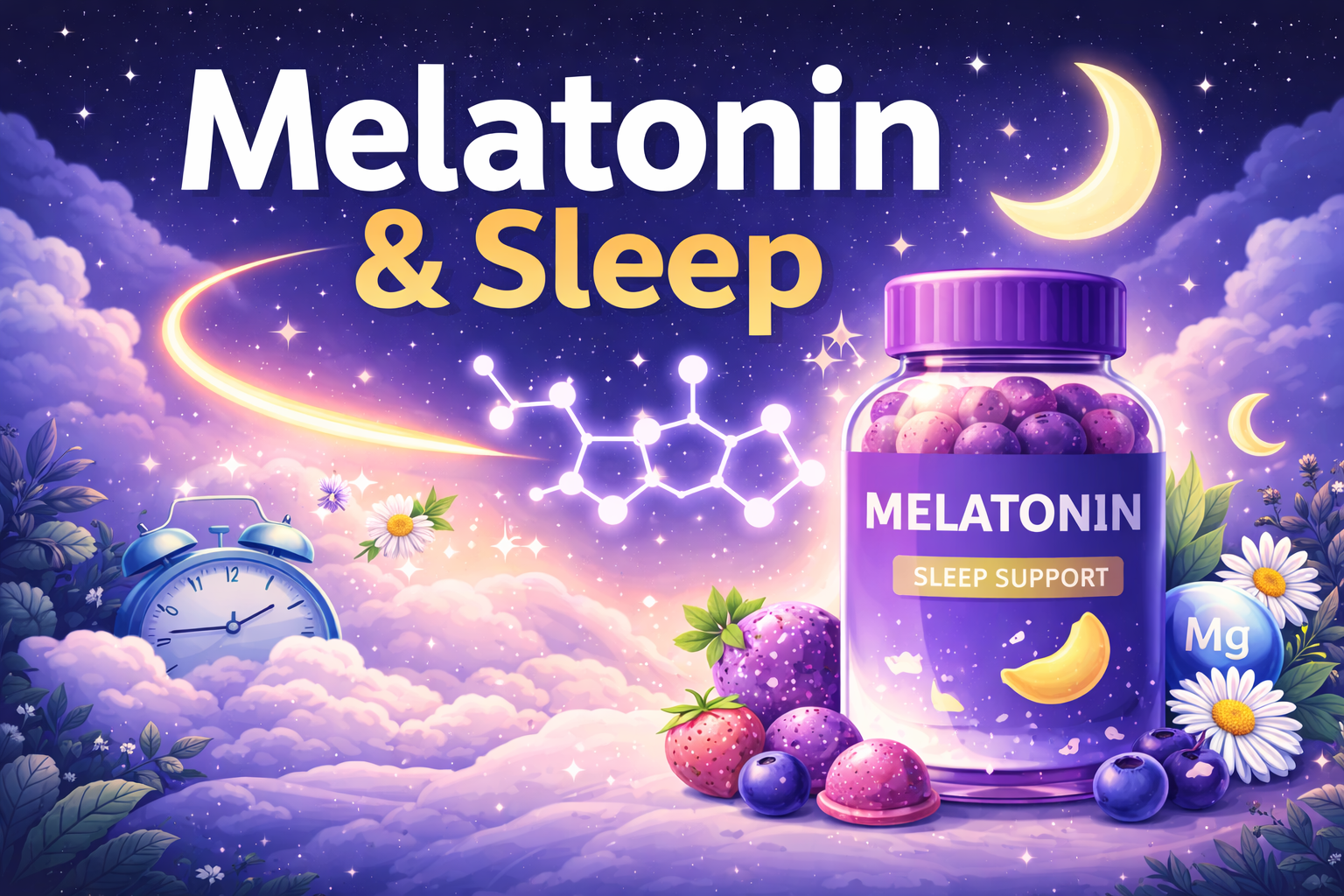
Within this category, melatonin-based gummies remain the most common formulation, due to melatonin’s established role in sleep regulation and its familiarity among consumers.
Editor’s Pick for melatonin tablets & Gummies


Understanding Melatonin in Simple Terms
Melatonin is a hormone naturally produced by the body in response to darkness. Its primary function is to signal that it is time to sleep and to help align the body’s internal clock with the day–night cycle.
Under normal conditions, melatonin levels rise in the evening, peak overnight, and decline in the morning. Modern lifestyles—especially exposure to bright and blue light at night—can suppress this natural rise, making it harder to fall asleep at the desired time.
Supplemental melatonin is used to support or reinforce this natural signal, particularly in situations such as:
- Difficulty falling asleep
- Jet lag
- Shift work
- Temporary sleep disruption due to stress or schedule changes
It is important to understand that melatonin does not function like a sedative. It does not “force” sleep but rather helps the body recognize the appropriate timing for rest. This distinction is key for setting realistic expectations.
What Research Shows About Effectiveness
Scientific evidence indicates that melatonin can be helpful for certain sleep-related challenges, particularly in reducing the time it takes to fall asleep and supporting circadian rhythm alignment.
Clinical studies and reviews generally show:
- Modest reductions in sleep onset time
- Small but meaningful increases in total sleep duration
- Better outcomes when used at appropriate doses and timing
Melatonin appears most effective for timing-related sleep problems, rather than severe or chronic insomnia caused by underlying medical or psychological conditions. This makes it suitable for short-term or situational use rather than as a universal long-term solution.
Multi-ingredient sleep gummies that combine melatonin with calming nutrients or botanicals may improve perceived sleep quality and nighttime relaxation, though outcomes depend heavily on formulation quality and individual response.
Safety and Responsible Use
For most healthy adults, short-term use of melatonin at low to moderate doses is generally well tolerated. Reported side effects—such as mild headache, dizziness, or next-day grogginess—are typically dose-related and temporary.
However, long-term and continuous use raises unanswered questions. Research is still evolving regarding the effects of prolonged supplementation on hormone regulation and overall health. Additionally, dietary supplements are not regulated as strictly as prescription medications, which means product quality and dosage accuracy can vary.
Responsible use involves:
- Using the lowest effective dose
- Avoiding daily long-term dependence without guidance
- Consulting a healthcare professional for chronic sleep issues
- Being cautious in children, adolescents, and individuals with existing medical conditions
Sleep gummies should be viewed as support tools, not substitutes for medical care or healthy sleep habits.
Supporting Ingredients Commonly Used in Sleep Gummies
Many sleep gummies include additional ingredients aimed at promoting relaxation and nighttime calm. Common examples include:
- L-theanine, which supports relaxation without sedation
- Magnesium, which contributes to normal nerve and muscle function
- Herbal extracts such as chamomile or valerian, traditionally used for calming effects
These ingredients allow formulations to address stress and relaxation alongside sleep timing, making them appealing to consumers seeking a more holistic approach.
Who Uses Sleep Gummies—and Why
Sleep gummies are used by a wide range of consumers, including:
- Professionals with demanding schedules
- Parents managing irregular sleep routines
- Travelers dealing with jet lag
- Shift workers adjusting to non-standard hours
- Wellness-focused individuals seeking gentle sleep support
In the U.S. market, variety and accessibility play a major role. Products are often offered in multiple strengths, sugar-free versions, and child-specific formulations, with subscription options that encourage consistent use.
How Consumers Discover and Buy Sleep Gummies
Digital channels are central to the growth of sleep gummies. Most consumers research sleep products online before purchasing, relying on:
- Reviews and ratings
- Educational articles and blogs
- Comparison content
- Social media and influencer recommendations
E-commerce platforms serve as both discovery and purchase points, while physical retail supports brand visibility and trust. Clear information, transparent labeling, and credible content significantly influence purchasing decisions.
Integrating Sleep Gummies Into Healthy Sleep Practices
Sleep experts consistently emphasize that supplements work best when combined with good sleep habits. These include:
- Maintaining a consistent sleep and wake schedule
- Reducing screen exposure before bedtime
- Creating a dark, quiet, and cool sleep environment
- Avoiding heavy meals, caffeine, and nicotine at night
- Practicing relaxation techniques
Within this context, a sleep gummy can become part of a calming evening routine rather than a standalone fix.
Long-Term Value Perspective
The growth of the sleep economy reflects a deeper shift: people are increasingly willing to invest in products that support daily functioning, mental clarity, and overall well-being. Sleep gummies sit at the intersection of convenience, accessibility, and perceived safety.
For readers and consumers, the most valuable takeaway is not that sleep gummies are a cure-all, but that sleep quality improves most when informed choices, healthy routines, and appropriate tools are combined thoughtfully.